
Where we work
Three fields where the ground rules the design
AGeological storageNuclear waste disposal · CO₂ storage · Geo-energyHost rocks, engineered barriers and reservoirs: demonstrating and optimising their coupled behaviour over very long time scales.BExcavations, foundations & tunnelsDeep excavations · Foundations · Tunnels & shafts · Underground infrastructureDeep pits, foundations, tunnels and shafts, often next to infrastructure that must stay in service.CComplex ground & site characterisationSoluble & creeping ground · Field tests · Geological historySoluble, creeping or unusually pressured ground: turning boreholes, field tests and geological history into reliable parameters.
Nuclear waste disposal · CO₂ storage · Geo-energy
Geological storage
Host rocks, engineered barriers and reservoirs: demonstrating and optimising their coupled behaviour over very long time scales.
What we address
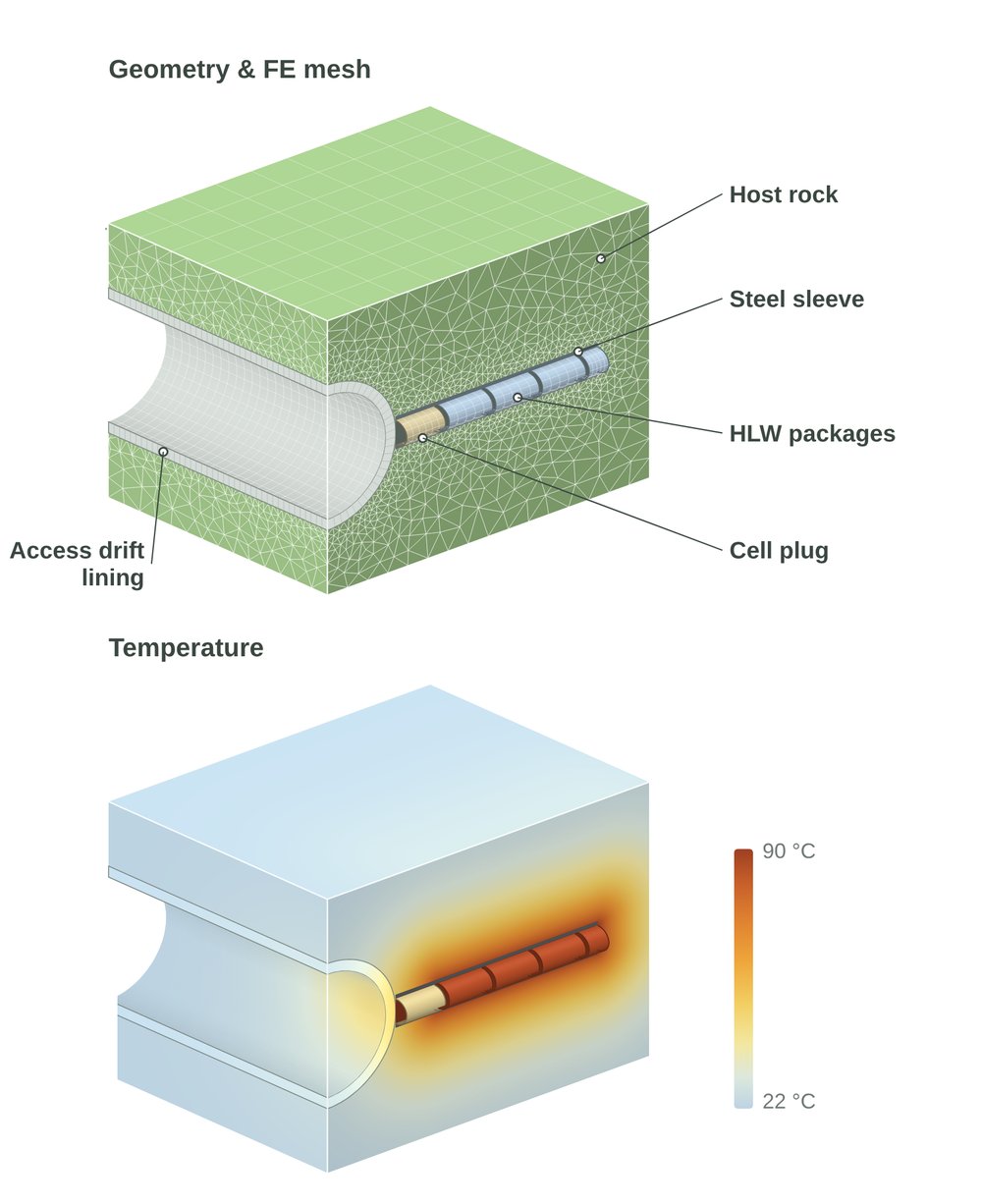
- Thermo-hydro-mechanical characterisation of clay host rocks and caprocks
- Bentonite buffers: hydration, vapour and liquid transport, thermal properties
- Long-term performance and design optimisation: repository layout, spacing and barrier properties
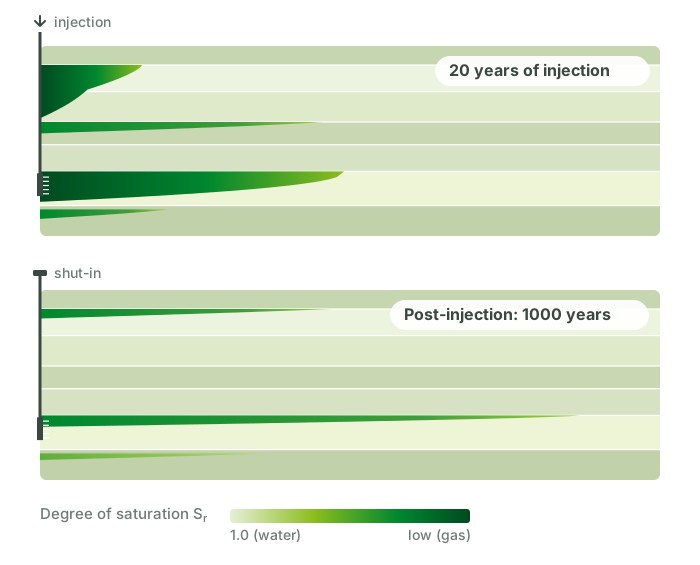
- CO₂ storage: optimised injection strategies, plume migration, capacity and containment
Examples of our work
- Coupled TH/THM models of disposal scenarios over 10,000 years, with Monte Carlo ensembles
- Triaxial testing campaign on a clay host rock, coordinated across five laboratories Publication
- Plume migration checked against faults and legacy wells over 1,000 years Publication
Expertise involved
Deep excavations · Foundations · Tunnels & shafts · Underground infrastructure
Excavations, foundations & tunnels
Deep pits, foundations, tunnels and shafts, often next to infrastructure that must stay in service.
What we address
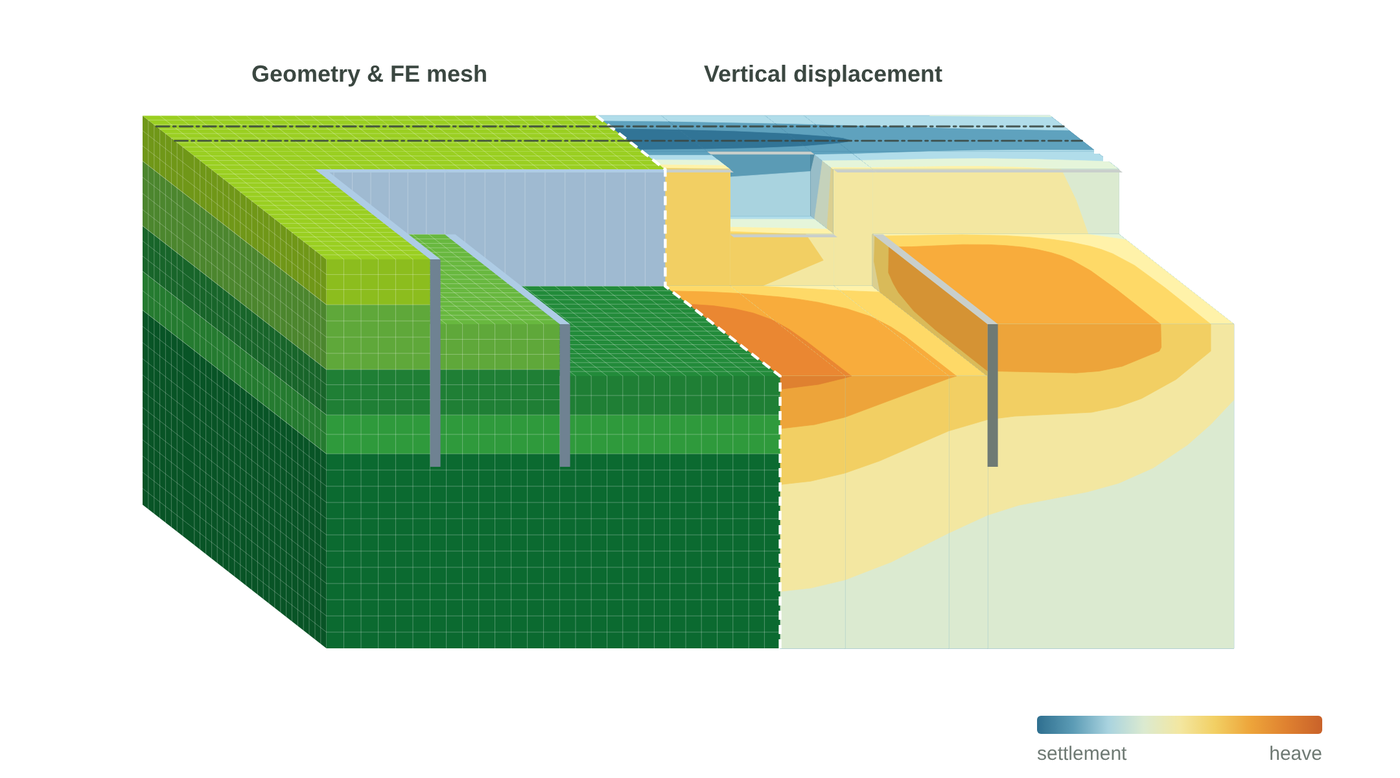
- Deep excavations with anchored walls and soil nails, staged in 2D and 3D
- Pile and raft foundations with non-linear soil–structure interaction
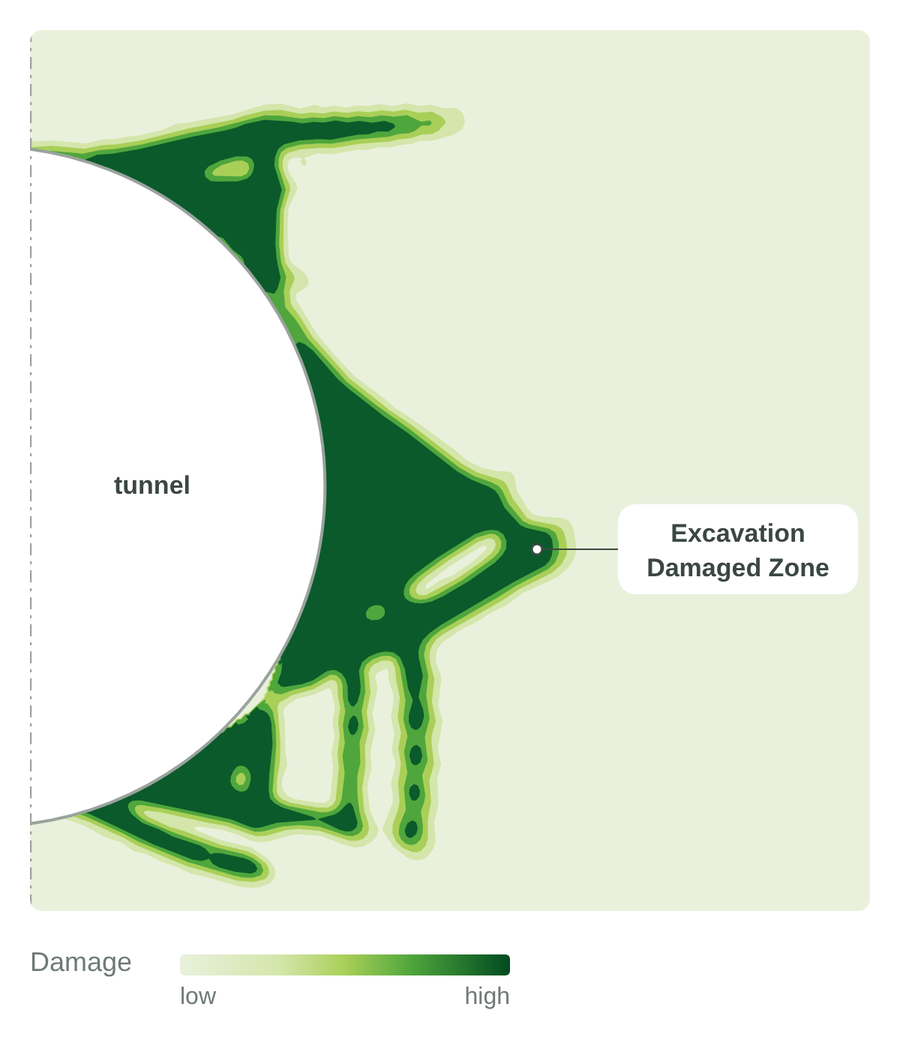
- Tunnel and shaft convergence, damaged zone and lining interaction
- Underpinning and works compatible with continuous operation
Examples of our work
- 3D staged model of a deep excavation beside infrastructure in continuous operation
- Dense pile foundation verified across the whole foundation system
- HM excavation models with an anisotropic hardening–softening law implemented as a user subroutine
Expertise involved
Soluble & creeping ground · Field tests · Geological history
Complex ground & site characterisation
Soluble, creeping or unusually pressured ground: turning boreholes, field tests and geological history into reliable parameters.
What we address
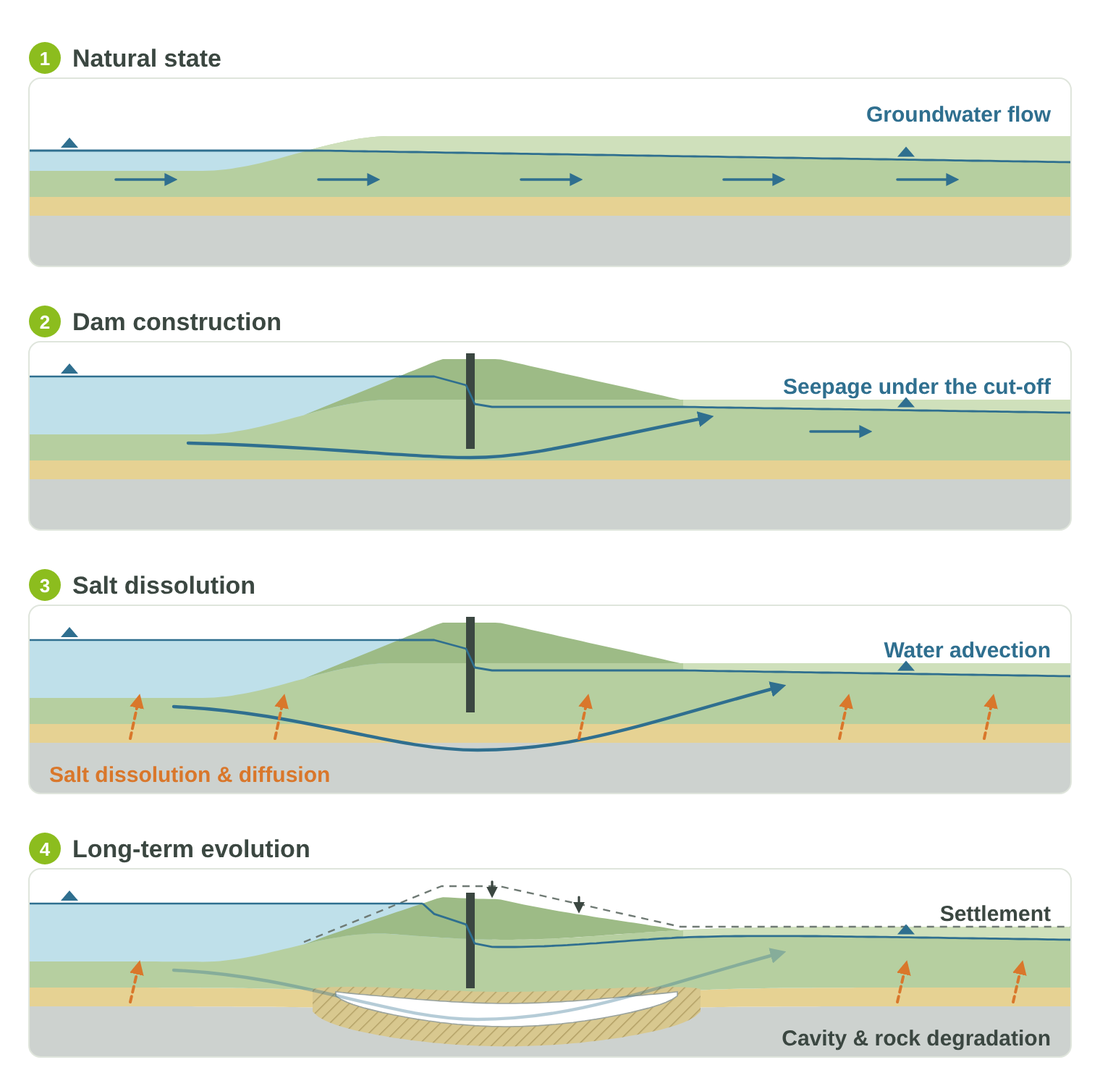
- Dissolution risk under changing groundwater flow
- Creep of evaporites and soft rocks, settlement and heave
- Hydro-mechanical interpretation of packer and hydraulic tests
- In-situ pore pressures and their geological origin
Examples of our work
- Density-dependent hydro-chemical flow model locating dissolution risk beneath a development
- Creep tests on salt rock reproduced with a time-dependent constitutive law
- 3D HM model of a packer test, including drilling-mud–formation interaction Publication
Expertise involved
May we help you?Let’s discuss your next challenge